

Learn about FIV
Break the Stigma
What is FIV?FIV stands for Feline Immunodeficiency Virus.
At its core, FIV just means a cat has a slightly weaker immune system than average. That’s it. It doesn’t mean they’re constantly sick, it doesn’t mean they’re suffering, and it definitely doesn’t mean they can’t live long, happy, completely normal lives.
Most FIV+ cats live just like any other cat. The only real difference is that if they do get sick, their body might need a little extra support to bounce back.
How do cats get FIV?FIV is spread primarily through deep bite wounds, most often from serious fights between cats.
Because of this, it’s most commonly seen in outdoor, unneutered cats who are more likely to fight due to hormones and completion over females and territory.
FIV is not spread through casual contact. The virus does not live on surfaces. Cats cannot get FIV from sharing bowls, litter boxes, grooming, playing, or snuggling.
In rare cases, a mother cat can pass FIV to her kittens.
In a stable home with friendly cats, the risk of transmission is extremely low.
If "insert cat" is good with other cats - how did they get infected?This is a common and fair question!
Most FIV+ cats didn’t get it as a house cat, they got infected while roaming outside.
Many of these cats came from life outside, where survival sometimes means fighting. It only takes one deep bite wound from an infected cat to transmit FIV. That could have happened months or even years ago.
And here’s the important part: a cat can be friendly now and still have a past.
Once they’re safe, fed, and not competing for resources, a lot of cats don’t feel the need to fight anymore.
So, being FIV+ doesn’t mean a cat is aggressive. It usually just means they lived a harder life before rescue and had to survive.
Can FIV+ cats live with other cats?Yes, in most cases, they can.
In a stable home with well-matched, non-aggressive cats, the risk of transmission is very low.
The key is personality, not FIV status. Cats that get along, have proper introductions, and aren’t fighting are generally safe to live together.
At DHC, we test every cat with other cats and are fully transparent about their behavior, so you’re not guessing. You know exactly what kind of home they’ll do best in.
As always, we recommend slow introductions and thoughtful matching but FIV alone is not a reason a cat has to live alone.
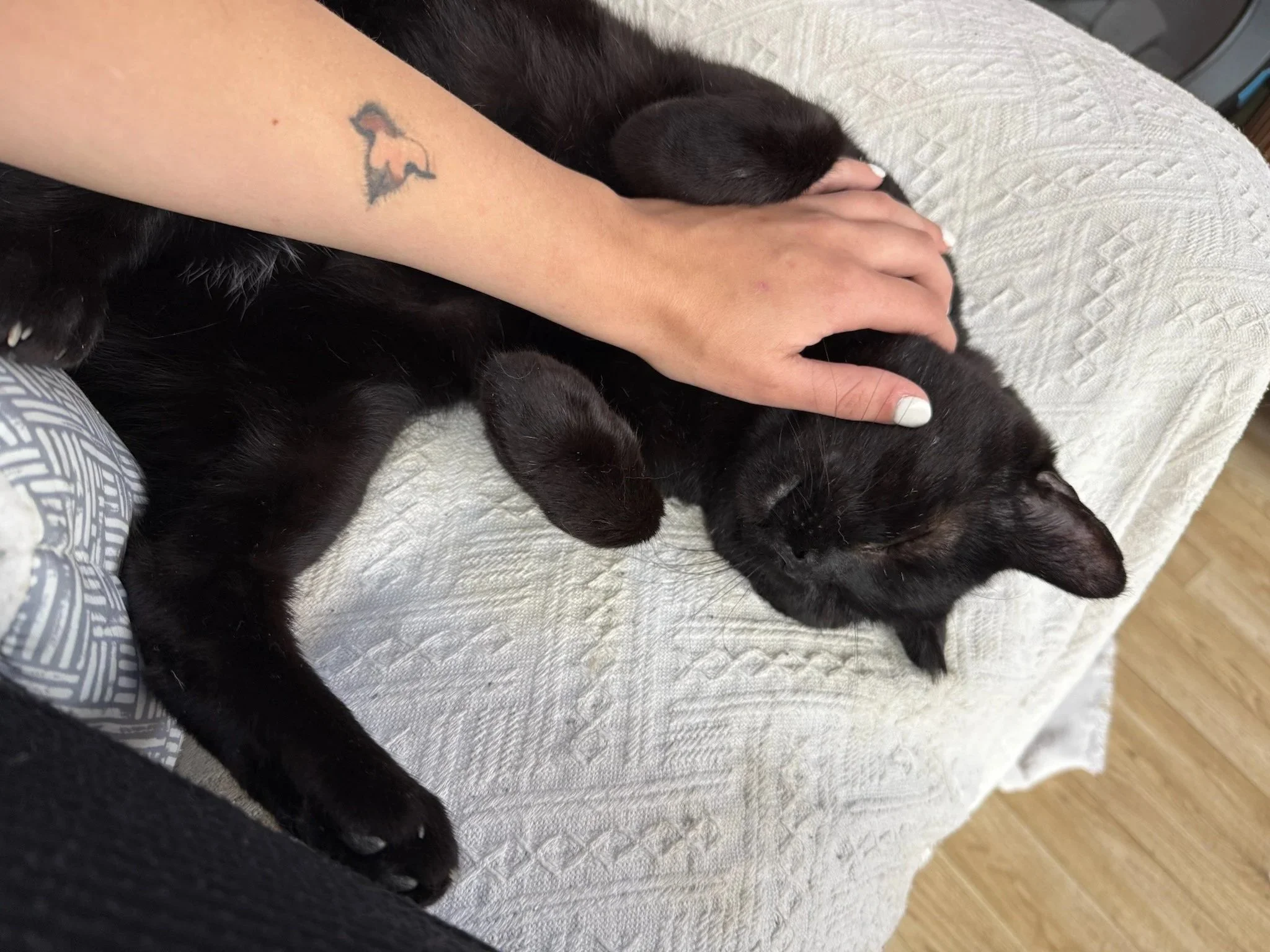
What does daily life look like for them?Life is normal, if we didn’t tell you they have FIV, you may never know. They eat, play, sleep, and act like any other cat.
The main difference is being a little more mindful of their health. If they get sick, they may need treatment sooner rather than later, since their immune system isn’t as strong.
That’s it. No special routine, no complicated care, just a little extra awareness.
Most FIV+ cats live completely normal, happy lives.
How is FIV treated or managed?There is no cure for FIV, but it also doesn’t require constant treatment.
Management is simple and focused on keeping the cat healthy:
Routine vet care (regular checkups, staying up to date on vaccines)
Prompt treatment if they get sick (don’t “wait it out”)
Good nutrition
Indoor-only lifestyle to prevent exposure to illness and injury
Most FIV+ cats do not need daily medication. They are treated like any other cat unless an issue comes up. That said, if you want to supplement with products such as Imuquin, you can.
The goal is just to support their immune system and address problems early, not manage a constant illness.
Does FIV shorten the lifespan of a cat?Many FIV+ cats live normal, full lifespans.
FIV itself doesn’t have a set timeline. What matters most is overall care. Things like staying indoors, good nutrition, and getting medical attention early if something comes up.
Some cats may be more prone to infections over time, but with proper care, those issues are often manageable.
The biggest takeaway: FIV is not a death sentence. A well-cared-for FIV+ cat can live just as long and just as happily as any other cat.
Can humans or other pets get FIV?No.
FIV is species-specific, which means it only affects cats.
Humans cannot get FIV. Dogs cannot get FIV. Other animals cannot get FIV.
It is completely safe to live with and care for an FIV+ cat.
Why do FIV cats get overlooked?FIV+ cats are often passed over simply because of the name. It sounds serious, and a lot of people assume it means a short, sickly life or a “complicated” cat. That’s usually not the reality.
Most FIV+ cats live normal lives, act like any other cat, and don’t require anything beyond basic, attentive care. But because of the stigma, they tend to wait longer for homes or get overlooked entirely.
FIV+ knowledge has increased dramatically overtime, as well. Many Veterinarians are learning that FIV is not the death sentence if was seen as in the last decade.
When you adopt an FIV+ cat, you’re not signing up for something extreme. You’re just giving a cat a chance that others didn’t take the time to understand.
These cats are often some of the best cats. The ones who have been through it a bit are more than ready to settle into a home and be yours. If you’re looking for a good cat, don’t let three letters be the reason you say no.